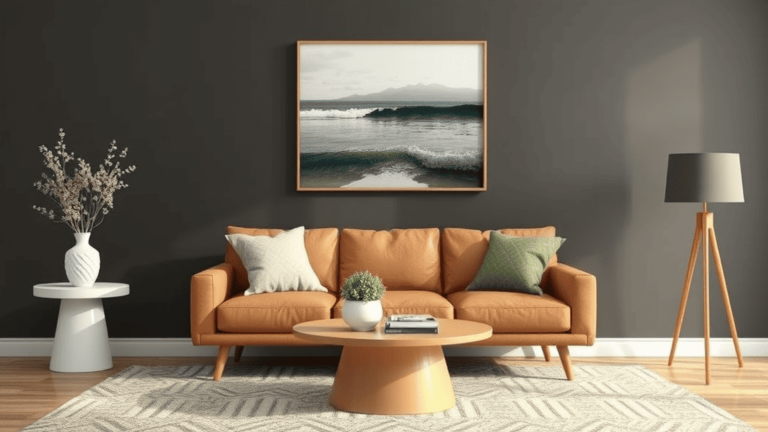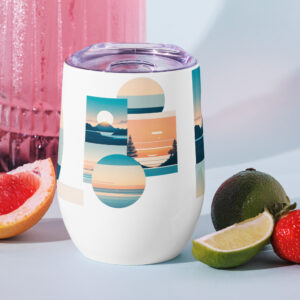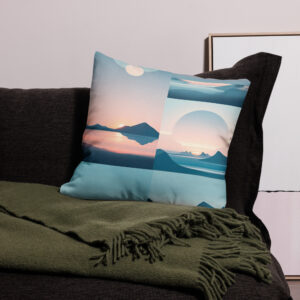
The minimalist art to your emotional well-being it is a philosophy that transforms not only our spaces, but also our way of living, generating calm and creativity in day-to-day. This artistic approach, which focuses on the simplicity and the reduction of elements, offers a number of benefits that can improve your emotional well-being. Below, we’ll explain how the minimalist art can positively influence your day to day life.
Stress reduction through Art Minimalist
One of the main advantages of the minimalist art is its ability to reduce stress. In our daily life, we are constantly bombarded by visual stimuli. The minimal art, the present compositions are clean and simple, can offer a respite visual. This allows your mind to rest and focus on what is essential, which may reduce the anxiety and stress.
Encourage Creativity with Art Minimalist
Minimalist art is not just about what is seen, but on what it feels like. When you delete the unnecessary, this style can help you to awaken your creativity. The simplicity of minimalist art invites us to reflection and new ideas. You can find inspiration in the way in which the artists use of space and form. This can motivate you to explore your creativity in various areas of your life, such as writing, painting or even the resolution of problems.
Connection with the Present
Incorporate art minimalist in your environment can help you connect more with the present moment. This type of art invites you to observe and reflect, promoting mindfulness (mindfulness). By decreasing the amount of visual distractions, it is easier to concentrate on the details of the environment and appreciate the small things that are usually overlooked. This not only improves your emotional well-being, but also to help you enjoy life more.
Create Spaces of Serenity
Minimalism goes beyond the art and can be applied to the decor of your personal space. When opting for a minimalist environment, you can create a serene retreat that helps you relax. Consider the following tips:
- Delete unnecessary objects for your spaces. This will clear your mind and will create an environment more relaxing.
- Choose a neutral color palette and soft. Colors can affect your mood, so choose shades that make you feel in peace.
- Incorporates pieces of minimal art to inspire you. This can be in the form of paintings, sculptures or even pictures.
Improved Concentration –
minimalist art fosters a better focus and concentration. In a world full of distractions, to have an environment to visually simple can help keep your focus on the important tasks. When your space is free of clutter, it is easier to focus on what really matters, whether it is work, study or any creative activity you’re doing.
Appreciation of Detail
Minimalist art also teaches the importance of focusing on the details. To see works that are minimalist, you learn to notice nuances and subtleties that are often overlooked. This practice can be applied to other aspects of your life, where you learn to appreciate the beauty in simple things can lead to a higher emotional well-being.
Emotional Connections
Finally, the minimalist art can generate emotional connections run deep. Through the simplicity you can often find deeper meanings in works of art. This connection can lead to moments of introspection and self-discovery, key to improving your emotional state.
Incorporate art minimalist in your life not only beautifies your surroundings, but also has a significant impact on your emotional well-being and creativity. By embracing the simplicity, you can create a space that promotes peace of mind and daily inspiration, turning your environment in an ally to your overall well-being.
Power up Your Creativity with Minimalist Art
Minimalist art is based on the simplicity, eliminating the unnecessary and focusing on the essentials. This artistic trend not only transforms physical spaces, but also have a profound impact on your daily life and in your way of thinking. To adopt principles of minimalism, you can open yourself to new possibilities that promote your creativity.
When you accept the minimalist art in your environment, create a space free of distractions. The lack of ornamentation is not just aesthetic; it also provides an environment conducive to reflection. Here we will show you how to minimalist art encourages creativity in your daily routine.
Mental clarity
One of the keys of minimalism is to clarity. When your environment is stripped of unnecessary elements, your mind will also feel more clear. This allows it to flow better ideas and inspiration. Some benefits of maintaining a minimalist include:
- stress Reduction: Less mess means less to worry about.
- Easy to focus: With less visual elements competing for your attention, you can focus on your creative projects.
- Increased productivity: uncluttered Space to encourage a more fluid and efficient.
Stimulation of the Imagination
To simplify your space, leave more space for the imagination. A minimalist environment you can, paradoxically, be more inspiring than one charged object. The simplicity of minimalist art invites your mind to fill in the empty spaces. Imagine being surrounded by a limited palette of colours and shapes: this does not restrict your creativity, but amplifies it, to allow you to explore new combinations.
Exercises To Boost Your Creativity
If you want to bring minimalist art to your daily life and enhance your creativity, consider these exercises:
- Clears your space: Start by clearing an area of work. Remove what you don’t need and see how your mind feels about it.
- Limit your tools: If you work in an artistic project, you select only a few tools. The restriction may open up new forms of expression.
- Practice writing minimalist: Write brief notes or ideas in a little space. This helps you focus on what is essential to distil your thoughts.
Building Reflection
Minimalist art also invites you to reflect on what really matters in your life. To remove the superfluous, you can see more clearly the essence of your interests and passions. This self-reflection allows you to ask you:
- What I love you really?
- How can I express my ideas in a more clear?
- What can I remove from my life to be more happy and creative?
Creating Routines Effective
Minimalism is not just limited to the aesthetic; it can influence in your daily habits. To establish routines for effective and simplified, you can free up time and energy that you can devote to creative activities. Here are some ways to make your life easier:
- Set schedules fixed: Dedicates specific hours to work on creative projects.
- Make a list of simplified: Keep your daily tasks and goals in a list with a few priorities.
- Incorporates a break: Program breaks to rest and allow the ideas to flow without effort.
Finally, adopting minimalist art can seem like a huge change, but the benefits are tangible. Allows you to see what really matters, stimulating your creativity and well-being. By focusing on the essentials and leaving the unnecessary, you can open the door to a life with more meaning, where the creativity not only be a part of your job, but a way of life. Each small action you take towards minimalism can be a step towards you more creative and happy.
Minimalist spaces: a refuge for the mind and body
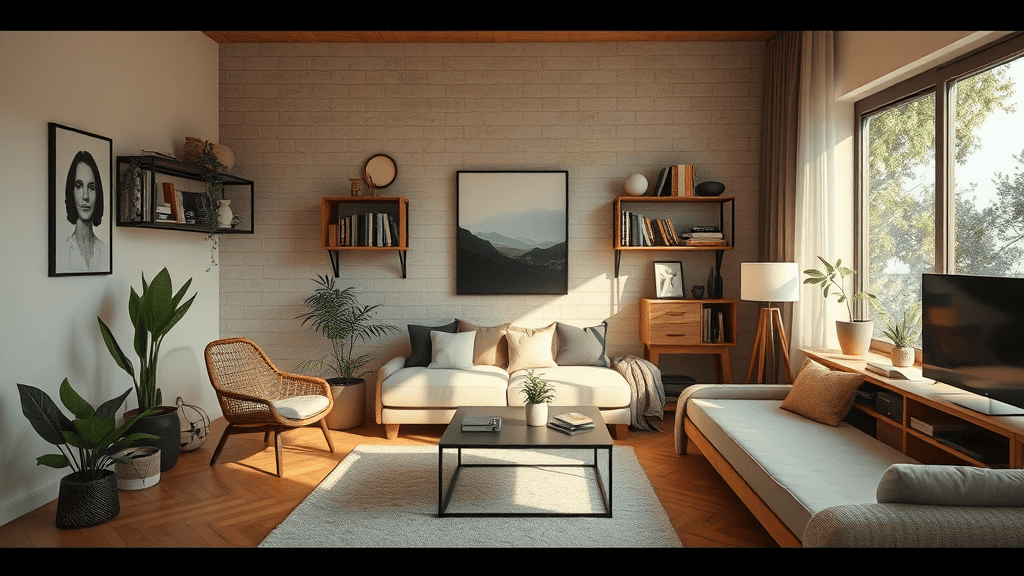
The life moderna can be full of noise, distractions and information overload. It is in this context where the minimalist spaces are presented as an ideal refuge, both for the mind as for the body. By adopting a minimalist approach in our environments, we can significantly improve our well-being and creativity. Below, we will explore how these spaces can become a true oasis of peace.
What is minimalism in space
Minimalism is based on the idea of “less is more”. In the context of spaces, this mean to get rid of unnecessary elements and focusing on what’s essential. A space minimalist is characterized by:
- neutral Color: Colors such as white, gray and beige, to create a serene atmosphere.
- Functional furniture: Each piece has a clear purpose and no decorative excess.
- Open space: the arrangement allows for The circulation of air and light, promoting a sense of freedom.
- Natural elements: add plants or organic material contributes to a healthy environment.
Benefits for the mind
The minimalist spaces offer a number of advantages that have a positive impact on our mental health. Some of the most significant benefits include:
- stress Reduction: An atmosphere cleared, you can decrease the anxiety and stress. When you surround yourself with fewer objects, your mind can better focus on what really matters.
- Improved concentration: In a space full of distractions, it is difficult to hold the attention. The minimalist spaces promote a clearer focus, facilitating the concentration on specific tasks.
- Mental clarity: Less visual noise translates into greater mental clarity. An ordered environment allows you to think more clearly and make more informed decisions.
Benefits for the body
and promote the mental health, the minimalist spaces also have a direct impact on our physical well-being. Some of these benefits are:
- Better air quality: With fewer objects, reduces the accumulation of dust and allergens, thus improving the air quality.
- Active lifestyle: An open space invites you to move with more ease, which can encourage a more active lifestyle, and healthy.
- Stimulating creativity: An environment neat and clean can inspire moments of creativity. On clearing away the unnecessary, you give space to new ideas and solutions.
How to create a space minimalist
If you are considering transforming your environment into a space minimalist, there are some simple steps that you can follow:
- declutter by: sort through your belongings and get rid of those items that you don’t use or that do not bring joy into your life.
- Choose the furniture properly: Opt for furniture with multiple uses. For example, a table that also serve as storage.
- Minimalism digital: Not only about the physical space. Considered clean your digital space by removing old files and unnecessary applications.
In summary, the minimalist spaces are much more than just a trend aesthetic. It is presented as a powerful alternative to improve our well-being and creativity. To create an environment conducive to the calm and clarity, will not only benefit our mind but also our body. Any person can start to transform your home or office into a haven minimalistic and enjoy all the positive effects that it can bring to your daily life.
The connection between minimalist art and the reduction of stress
Minimalist art has gained popularity in recent years, not only for its aesthetics, but also for its benefits in daily life of people. One of the areas most fascinating where we find the influence of the minimalist art is in the reduction of stress. This artistic style is characterized by the simplicity and minimal use of elements, which can have a significant impact on our mental well-being.
When you’re immersed in the world of minimalist art, you find yourself with space and works to eliminate the superfluous. This approach provides peace of mind and a sense of order. The look works minimalistas, your mind can relax and reduce the overload of stimuli, something that can be very beneficial in a world full of noise and chaos.
Main benefits of minimalist art in the reduction of the stress
- Less distractions: Minimalist art focuses on the essentials. By removing unnecessary elements, you allow people to focus on what really matters. As in everyday life, the less distractions can help to reduce anxiety.
- Mental clarity: the simplicity of The minimalist art promotes a clearer mind. Enjoy a room with a minimalist design can lead to a state of calm which is essential for the emotional well-being.
- Creative inspiration: Despite its simplicity, the minimalist art can be incredibly inspiring. The observed shapes and colors are simple, you can get a new approach to your own creations, which helps to free the mind from negative thoughts.
- Spaces ordered: The minimalist aesthetic is often translated in a physical environment tidy. Having a clean, organized space contributes significantly to reduce the stress, as it allows you to feel more in control over your environment.
- Promotion of meditation: The contemplation of minimalist art can serve as a form of meditation. By devoting a moment to appreciate the simplicity and the beauty of a work, you can find a space of inner peace.
When you deploy the art is minimalist in your life, you’re not only adding aesthetic appeal to your home, but you’re also creating a refuge for your mind. The benefits of minimalist art encourages you to reflect on your priorities and make decisions more aware about what you want in your personal space.
Another way in which art minimalist help to reduce stress is through the creation of spaces for relaxation. An environment well-designed, with a few elements and a palette of soft colours, you can invite calm, and create a conducive environment for the disconnection. This is especially valuable in times of high work pressure or personal.
How to incorporate the art is minimalist in your life to combat the stress
- Redesign your space: Begin by assessing your home or place of work. Get rid of items you don’t need. An environment physically lighter can lead to a mind that is more lightweight.
- Selected works of minimalist art: Choose pieces that resonate with you and bring you peace of mind. Works with neutral colors or simple designs may have a calming effect.
- Make a dedicated space for meditation: Devoted a corner of your home to the meditation or reflection. You can decorate it with minimalist art to enhance its relaxing effect.
- Get inspired: a Search for books or online resources about minimalist art. To understand his philosophy, you’ll be able to apply these principles in your daily life.
In short, the minimalist art is not only an aesthetic tendency, but also a powerful tool to improve your well-being. By reducing the stress through an environment simplified and aesthetically pleasing, you can find a new balance in your life. The beauty of how simple can be transformed into a haven of peace in the midst of the noise of everyday life.
Examples of minimalist artists that inspire positive change
Minimalist art has been a source of inspiration and positive change in the world of art and beyond. This style, focused on simplicity and the reduction of elements, has allowed many artists to convey deep messages and significant through an approach that is clear and direct. Below, you’ll discover some of the minimalist artists most influential to have left a mark and how your work can inspire you to make changes in your life.
Donald Judd
Donald Judd is one of the pioneers of minimal art. Their approach is based on the use of simple geometric shapes and the removal of decorative elements. Judd believed that art should be a direct experience, without distraction. Her installations, made of metal and plexiglass, they invite viewers to interact with the space in a way that promotes reflection and tranquility. The clarity in your work teaches us to appreciate what is essential and to find beauty in simplicity.
Agnes Martin
Agnes Martin was an artist who captures emotions deep through the simplicity. His works, which often consist of smooth lines and soft colors, transmit serenity and peace. Martin believed in the idea that art should evoke an emotional reaction, and his work invites you to meditation and contemplation. The emotional quality of his paintings can inspire you to seek moments of calm and clarity in your daily life.
Dan Flavin
Dan Flavin used fluorescent lights in their facilities to explore the impact of light and color in the space. His work challenges the perception and transforms environments common in unique sensorial experiences. The use of industrial materials, Flavin reminds us that the aesthetic can be found in everyday objects. This approach highlights the beauty in what we often overlook, and encourages us to see the world from new perspectives.
Ellsworth Kelly
Ellsworth Kelly, known for his great works of flat color, celebrates the simplicity of the shape and the vibrant energy of the color. His paintings are a test of visual perception. Kelly invites us to appreciate life through a lens more pure, where the colors and forms become mediators of emotional stimuli. This approach may help to simplify your environment and focus on what really adds value to your life.
Isamu Noguchi
Isamu Noguchi, although often classified as a sculptor, he incorporates elements of minimalism in his work. His sculptures include the simplicity and harmony with nature. Through the use of natural materials, such as stone and wood, Noguchi creates pieces that resonate with the environment. His work is not only visually striking, but also promotes the connection with the earth and the essence of simple. Learn how to integrate natural elements in your life can improve your personal well-being.
Josef Albers
Josef Albers was an educator and artist who was focused in the perception of color and shapes. His works, including the series “Homage to the square”, they invite viewers to experiment with the interaction between colors. Albers shows us that even the simplest form can have multiple meanings and effects on our emotions. Your approach may inspire you to see the colors and shapes that surround you and to find joy in the simple.
Final Thoughts
These minimalist artists have not only transformed the art scene, but also offer valuable lessons about life. The works of Judd, Martin Flavin, Kelly, Noguchi, and Albers teach us the importance of simplicity, contemplation, and emotional connection with our environment. Incorporate elements of his philosophy in your daily life, can help reduce the chaos and to promote a well-being more profound and authentic.
Explore his art can be a first step towards a life that is more simplified and focused. As well as they have left a lasting impact on the modern art, you can make positive changes in your life and in your environment through the beauty of a minimalist.
Conclusion
Minimalist art is not only an aesthetic style, but a powerful tool that can transform your well-being is emotional and creative. To reduce the visual noise and focus on what’s essential, you can experience a noticeable improvement in your mood. This simple approach promotes mental clarity, which in turn strengthens your creativity in daily life.
The minimalist spaces act as a shelter, allowing you to find peace and tranquility in environments often overwhelming. By eliminating the clutter, you open the door to an environment that promotes concentration and calmness, helping to reduce stress.
Minimalist artists such as Donald Judd and Agnes Martin show us that simplicity can inspire profound changes. His work invites us to reflect on what is truly worth appreciating and how this can positively influence our life.
To incorporate the art is minimalist in your life, not only embelleces your environment, but also give way to a style of life more conscious and balanced. The emotional benefits and creative that emerge from this approach are invaluable. Get started today to explore minimalism and see how you can improve your well-being and enrich your creativity, creating a harmonious space both for your mind and for your body.
Are you ready to transform your environment? Discover more tips and products that will help you create a space full of calm and creativity in our blog.